Rethinking rehabilitation

Embedding person-centredness

Making a difference

Browse the collection

Featured

Publications
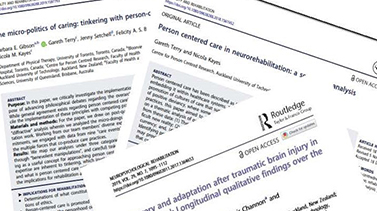
Browse journal articles and and other peer-reviewed research outputs from our members.

Browse articles

Reports, presentations and summaries

Explore bite-size research summaries, poster presentations and commissioned reports.

Browse other outputs

The AUT Person-Centred Rehabilitation Research Centre (PCR)

is a transdisciplinary research centre based in the School of Allied Health
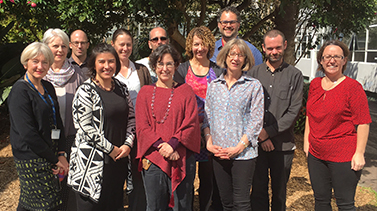
Our aims and purpose

Our core aim is to make a meaningful difference to the long-term health and well-being of people and whānau impacted by injury, illness, or disability through transformative, person-centred rehabilitation research and knowledge exchange.

Find out more ↗

Resources

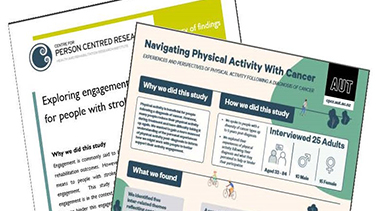
We've collated a number of resources based on findings from our projects on our website.

Resources on our website↗

Projects

We engage in a diversity of research projects. Explore our current mahi on our website.

Current research projects ↗

Recent Submissions

  • Item type:Item, Access status: Open Access ,
    Supporting Well-being After Stroke: A Framework for Care That Supports Well-being
    (Person Centred Rehabilitation Research Centre, 2024) Bright, Felicity; Wilson, Bobbie-Jo; Ibell-Roberts, Claire; Signal, Nada; Featherstone, Katie; Collier, Aileen; Fu, Vivian
    [Background to the Framework] Well-being is important for living well and flourishing after stroke. However, a focus on well-being is not routinely integrated into stroke care, resulting in it being a leading area of unmet need following stroke (Stroke Association, 2015). This framework was developed as part of the study “Psychosocial well-being after stroke: A study of care practices and processes in Aotearoa New Zealand”. This study explored: -How people experience well-being after stroke in Aotearoa New Zealand. -How stroke care practices can influence well-being. -How services and care might change to more consistently support well-being. While stroke survivors and whānau in this research described some pivotal events in care that influenced their well-being, it became clear that well-being was influenced by a myriad of ‘small moments and small actions’ woven throughout their experience of stroke services. This framework aims to make these ‘small moments and small actions’ visible, and to illustrate how services could “do things different” as we were prompted by stroke survivor, Poihaere Morris (Ngāti Awa). The framework aims to foster a proactive approach to supporting well-being after stroke, offering examples of actions that may be considered by policy makers, educators, service leaders, and individual healthcare professionals to prioritise well-being in stroke care.
  • Item type:Item, Access status: Open Access ,
    Unspoken, Unseen and at Time Silenced: The Emotional Work of People in Stroke Services in Aotearoa
    (Person Centred Rehabilitation Research Centre, 2023) Ibell-Roberts, Claire; Wilson, Bobbie-Jo; Bright, Felicity
    Background Well-being is critical to living well and flourishing after stroke. While physical aspects of recovery are commonly well addressed within services, broader aspects of well-being, including emotional aspects, can remain unrecognised and unsupported in care. Study aim: To identify how people’s experiences in stroke services impact on well-being. Methodology: Interpretive Description, exploring the experiences of people, family and whānau in stroke services Data gathering: Semi-structured interviews. 24 people with stroke and 13 family and whānau members Data analysis: Reflexive thematic analysis Findings: People undertake significant emotional work to navigate the impacts of stroke. People are involved in sense-making about the past and why the stroke occurred, (re)negotiating what is meaningful, navigating deep uncertainty and feelings of disconnection from self, from important others, and from elements of meaning in life. However, the depth of this work was reportedly unseen by others, sometimes hidden from staff, and at times, made visible but then actively or passively silenced through care practices. This could compound the emotional burden carried by people with stroke and whānau, and overall, contributed to people feeling alone and unheard. This burden could be mediated through the inherent resources that people held, through family, whānau and social networks, through cultural and spiritual identity, and through the practices of stroke clinicians.
  • Item type:Item, Access status: Open Access ,
    Grey Matters
    (Person Centred Rehabilitation Research Centre, 2020-01) Kayes, Nicola; McPherson, Kathryn; Norris, Pauline; Hale, Leigh; Collier, Guy; Reay, Stephen; Hayes, Nick; Worrall, Richard; Mudge, Suzie; Babbage, Duncan; Peri, Kathy; Khoo, Cassie
    What is Grey Matters? Your brain, like every other organ in your body, changes over time. Forgetfulness, for example, is a natural part of the ageing process. It’s common to experience other changes too: you might start to notice that you are finding it more difficult to come up with the right word, or losing the thread of conversations, books, and movies. Some people may experience only minor changes to their memory and thinking, while others may find that these changes are starting to interfere with their daily activities. People often come up with unique ways of managing these changes, so there is a lot we can learn from each other. Grey Matters is designed with and for people experiencing changes to their memory and thinking. It is a place where you can: • Learn about the ageing brain and how to keep your brain healthy • Explore the different strategies people use to help them through the day • Hear about the Tips, Tricks and Experiences of others that might help you
  • Item type:Item, Access status: Open Access ,
    WSS - The Work-ability Support Scale
    (Person Centred Rehabilitation Research Centre, 2022-12-15) Turner-Stokes, Lynne; McPherson, Kathryn; Fadyl, Joanna
    WSS is a measure designed to assess an individual's ability to work and support needs in the context of their normal working environment following the onset of acquired disability. WSS is also used to support decision-making with regard to vocational rehabilitation. It is designed to be used both for people actually in work, or as a planning tool for those considering returning to work. The tool has 16 items across three domains of work functioning: -Physical / Environment -Thinking and communicating -Social / Behavioural Scores range from 1 for constant support, to 7 for independence. There are also an additional 7 items related to contextual factors outside the workplace that could affect work functioning. (N.B. This measure is in the process of being updated)
  • Item type:Item, Access status: Open Access ,
    The Living Well Toolkit
    (Person Centred Rehabilitation Research Centre, 2018) Mudge, Suzie; Kayes, Nicola; Payne, Deborah; McPherson, Kathryn; Kersten, Paula; Weatherall, Mark; Harwood, Matire; Miles, Wayne; Kent, Bruce; Wilkinson-Meyers, Laura; Snell, Debbie; Gow, Peter; Smith, Greta; Sezier, Ann; Potter, Eden; Stewart, Lauren; Thornhill, Byron; Karan, Shivani
    The consequences of long term health conditions result in personal, family and societal burdens, that can be reduced with good quality care and support. People living with longterm conditions consider all these aspects to be part of good healthcare. Healthcare providers agree that these three things are vital components of healthcare and that they lead to better outcomes. Despite that, we don’t consistently see these as part of health services. The Living Well Toolkit To address this problem, we aimed to design and implement a toolkit with consumer guidance. We held focus groups and interviews with people with long term neurological conditions, family members and clinicians to determine how to operationalise these three key processes in the healthcare pathway. We developed the Living Well Toolkit following a four year research project, funded by the Health Research Council of New Zealand. The toolkit is a resource for clients living with long-term conditions. We have built on 10 years of research findings listening to what people with long-term conditions want from their healthcare: -Better communication -Building on strengths and resources -Planning for the future There are two parts to the Living Well Toolkit -Living Well Toolkit for clients -Living Well Toolkit for clinicians Living Well Toolkit for clients: Do you think you are getting the best out of your healthcare? We’ve designed the Living Well Toolkit with a lot of help from people with long-term conditions. We’ve listened to how you think healthcare could be better and the ways you think this can be achieved. The Living Well Toolkit can help you think about your needs and the things you want your health professionals to know about you, your family or your situation. Sharing this information with your health professionals helps them better understand your needs and customise care to suit you We’ve seen the toolkit used in lots of different ways. Living Well Toolkit for clinicians: We know that good quality healthcare can improve outcomes and the experience of clients with long-term health needs. Clients tell us that person-centred communication, building on their strengths and resources and planning for the future are important aspects of good healthcare and as clinicians, many of us think we do that well. We’ve talked to clients, family and clinicians about ways these processes could be better and have developed, tested and refined some resources that provide prompts about what matters to clients. “Who is this person and what do they need from me today?” The question that can help orient us to person-centred care, “Who is this person and what do they need from me today?” ADAPT principles As part of our research, we identified the ADAPT principles – five key principles that improve the healthcare experience for clients. Most clinicians who took part in our research found that the prompt card with the central orienting question and the ADAPT principles resonated with their views of person-centred practice and many clinicians found it helpful to remind themselves of these principles before starting a session. Video resources We have also developed some videos that demonstrate contrasting healthcare encounters of a similar clinical interaction. In scenario A, you might recognise common clinical statements and approaches. In scenario B the clinician is attempting to use the ADAPT principles to guide her conversation. Most clinicians recognise elements of their own practice in both videos.